Malaria
Presentation :
- Incubation periods range from 1 week to 3 months.
- Symptoms include fever, headache, myalgia, and gastrointestinal symptoms.
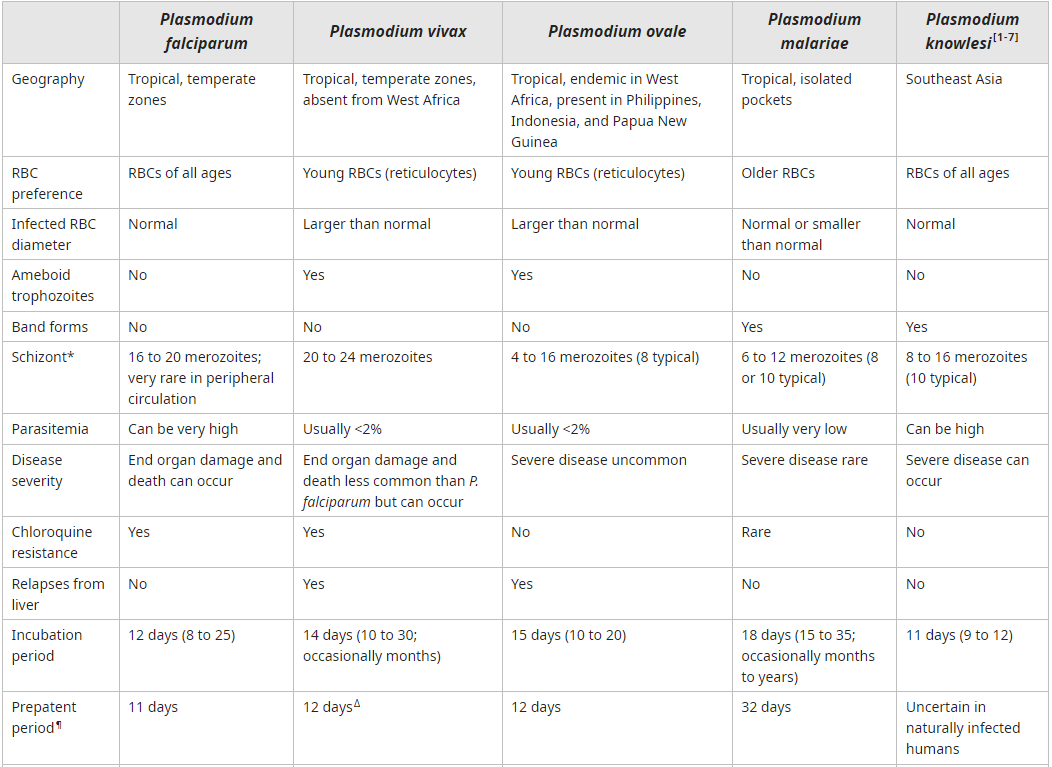
- Serious disease primarily occurs with Plasmodium falciparum, including mental status alterations, seizures, hepatic failure, disseminated intravascular coagulation, intravascular hemolysis, metabolic acidosis, kidney disease, hemoglobinuria, and hypoglycemia. Subsequently, anemia, thrombocytopenia, splenomegaly, and elevated aminotransferase levels may develop
- More severe disease occurs with hyperparasitemia (5%-10% parasitized erythrocytes).
- Because of their potential for severe infection, identifying P. falciparum and P. knowlesi is critical. Malarial symptom onset shortly after returning from travel to endemic zones, a high level of parasitemia, and distinctive morphologic characteristics should raise suspicion for P. falciparum infection.
Pathophysiology :
Diagnostic Testing:
- Identification of malarial parasites on the peripheral blood smear is diagnostic. Morphologic features help determine the specific species. Rapid tests that detect malaria antigens may lack sensitivity and specificity. Polymerase chain reaction (PCR) and serologic assays exist, although each has limitations.
Treatment :
- Prophylaxis:
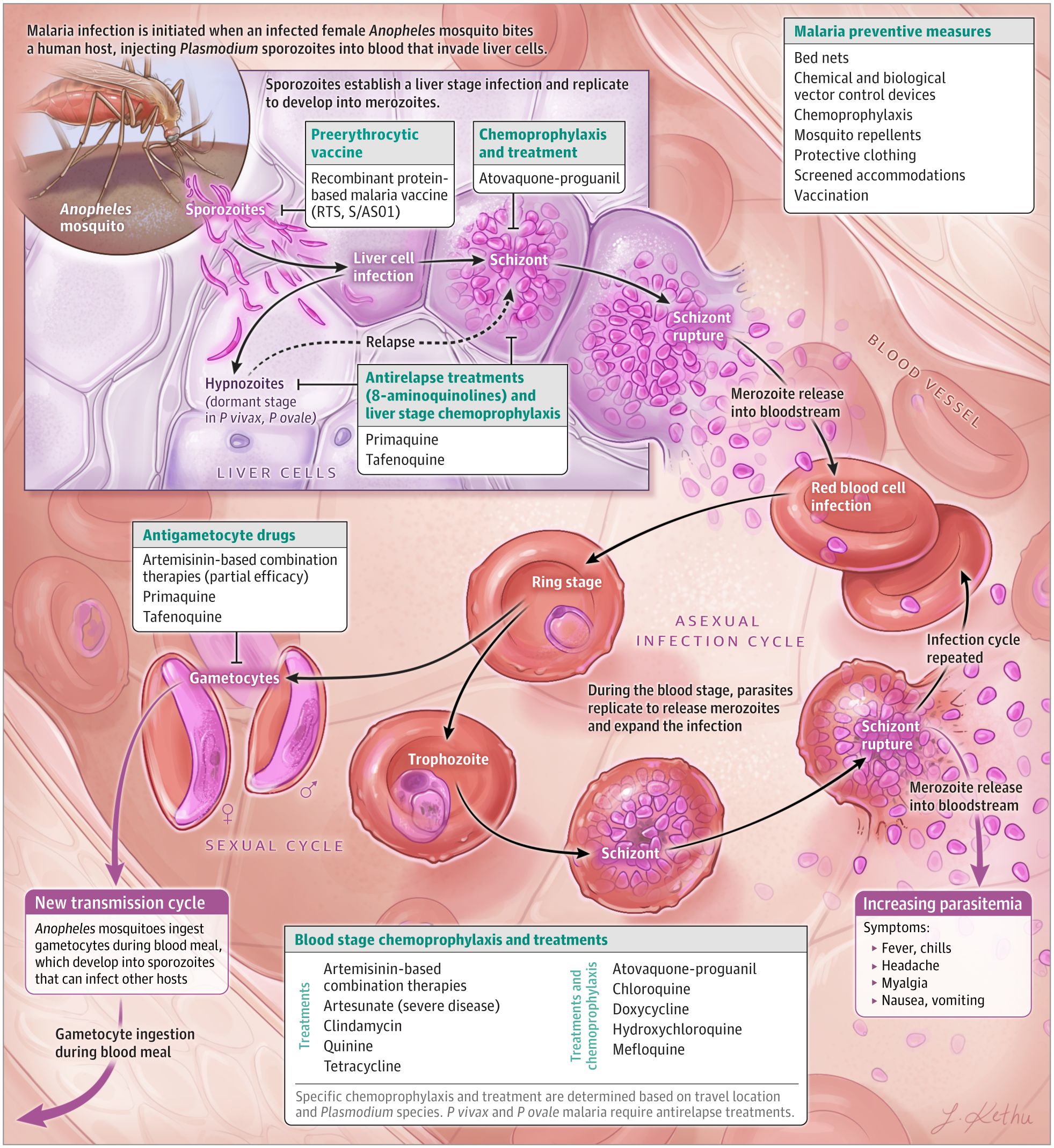
- Preventive measures include limiting outdoor exposure between dusk and dawn, using insecticide-impregnated bed nets and insect repellents containing 20% DEET, and using antimalarial chemoprophylaxis.
Prognosis:
References:
- MKSAP
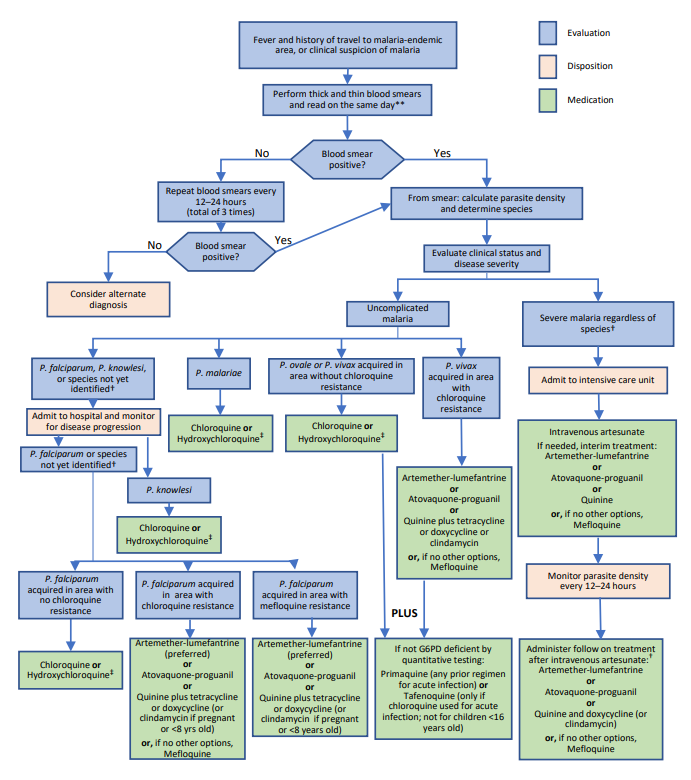
- https://www.cdc.gov/malaria/resources/pdf/Malaria_Managment_Algorithm_202208.pdf
- https://jamanetwork.com/journals/jama/article-abstract/2794759
Created at: periodic/daily/August/2023-08-02-Wednesday