Pit Vipers of North Carolina
Copperhead
- Appearance: Light brown with brown, hour-glass-shaped crossbands.
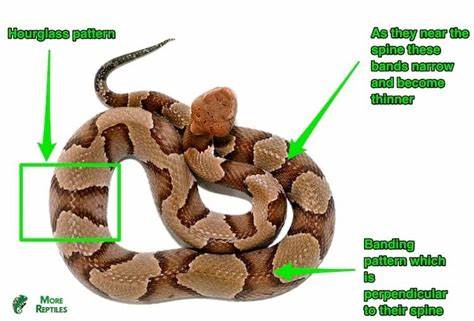
- Habitat: Everywhere
Cottonmouth (aka Water Moccasin)
- Appearance: Dark bands on dark/olive skin; characteristic white colored mouth
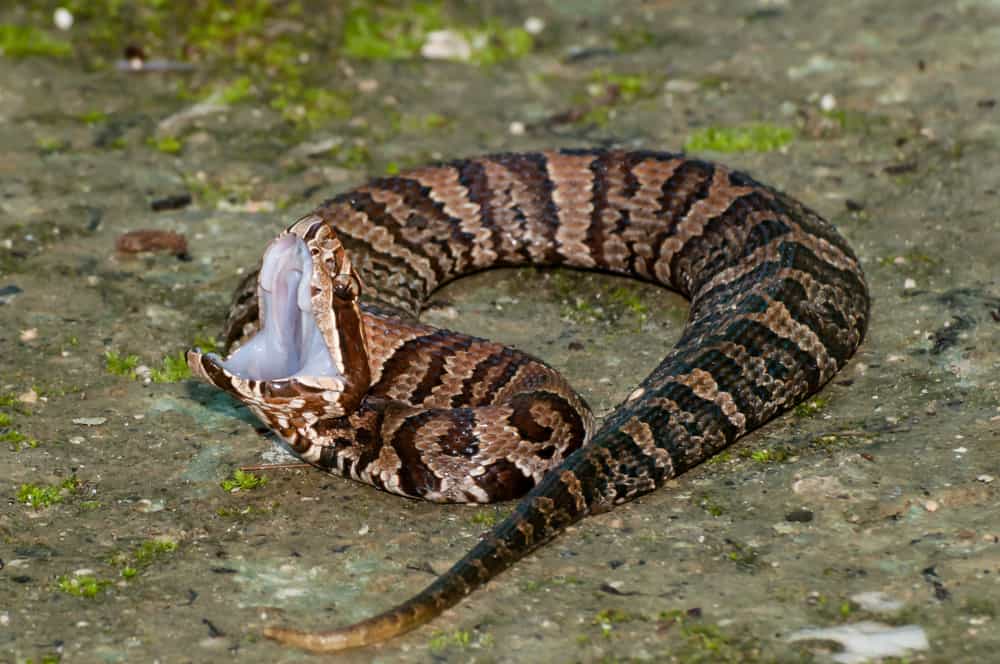
- Habitat: Prefers freshwater (streams, lakes, etc) but can also be found on land
Eastern Diamondback Rattlesnake
- Appearance: rattle; dark diamond pattern outlined in black on gray or yellowish skin.
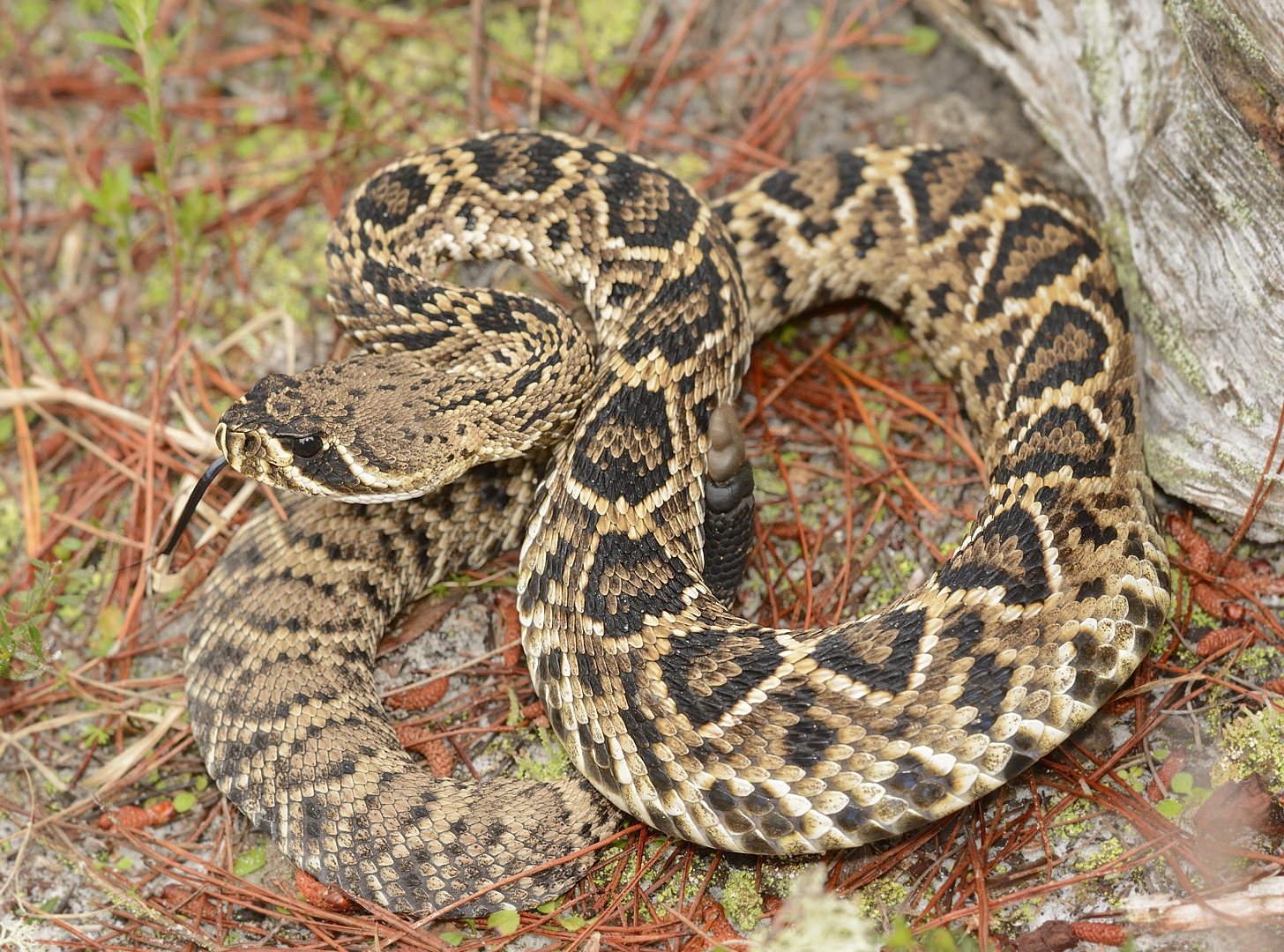
- Note: Largest and most venomous rattlesnake in the US
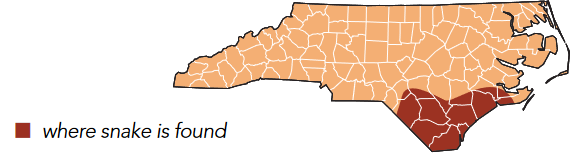
- Habitat: prefers sandy, costal areas. Most often found on the southeastern coast of NC
Timber Rattlesnake
- Appearance: rattle; color varies (black, gray, tan, or brown) with dark bands (sometimes V-shaped).
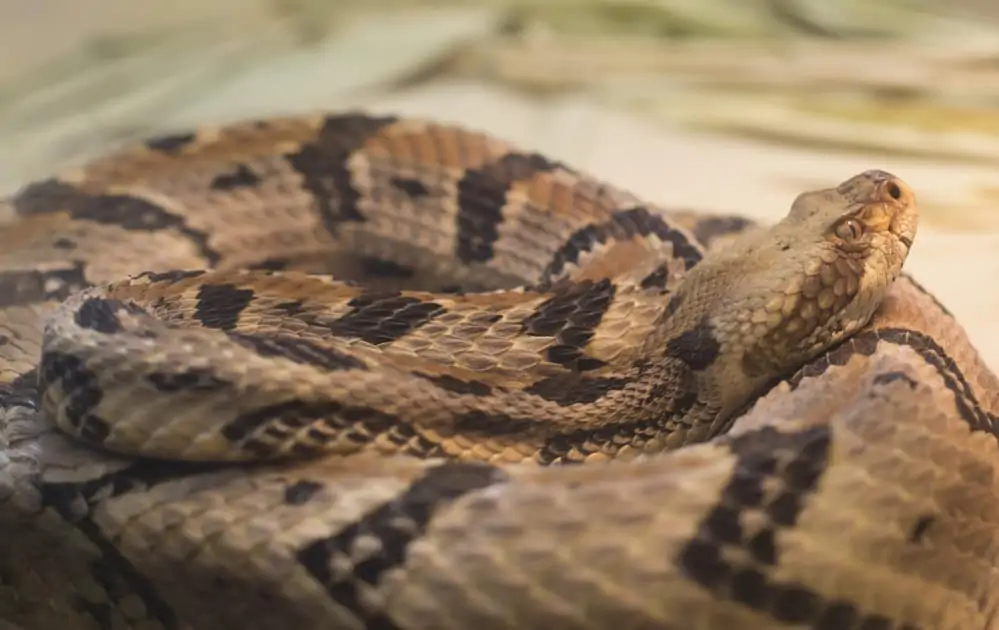
- Habitat: prefers forests
Pigmy Rattlesnake
- Appearance: dark spots on a grey/tan/red/pink background
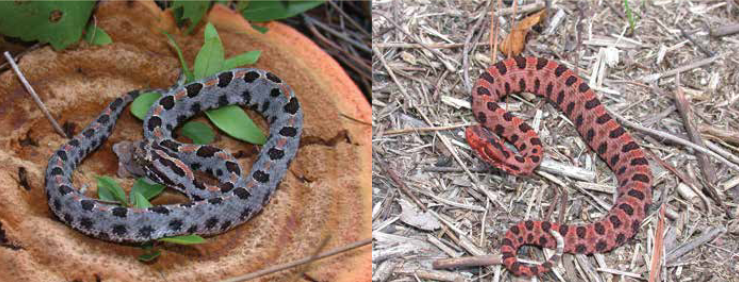
- Note: You may not hear this rattlesnake’s warning rattle. It’s fragile and often breaks off. If it does have a rattle, it only produces a quiet "buzzing" sound.
- Habitat: forests, costal plains, woodlands
Eastern Coral Snake (rare)
- Appearance: Red touches yellow; kills a fellow. Red touches black; venom lack. Black nose.
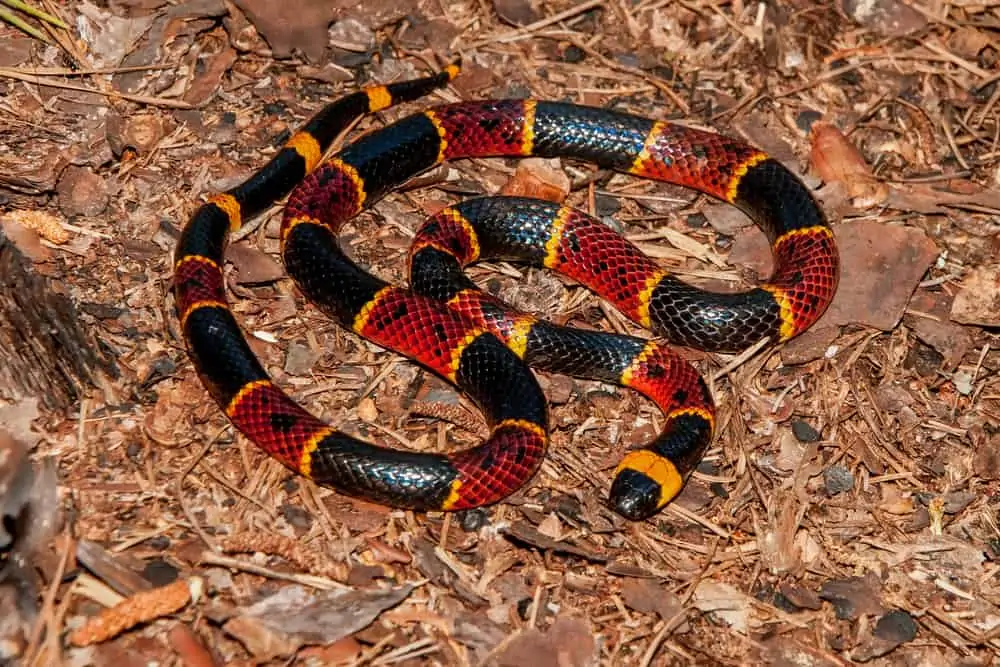
- Note: the above color band pattern ONLY APPLIES to North American coral snakes; it is not a 100% guarantee either as some individuals can have atypical coloring. When in doubt, best to leave it alone.
- Look-alikes include: scarlet kingsnakes and northern scarlet snakes
- Habitat: dry land
- Note: no documented cases of coral snake bites in North Carolina
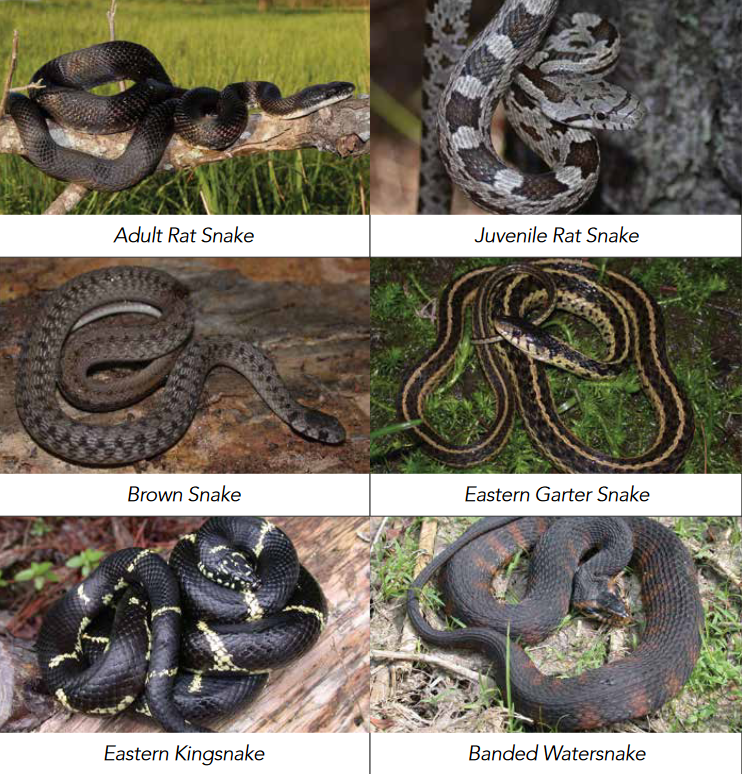
Friendly Snakes:
References:
- https://animalvivid.com/venomous-snakes-in-north-carolina/
- https://www.ncpoisoncontrol.org/types-of-poisons/venomous-creatures/snakes
- https://www.ncpoisoncontrol.org/-/media/nc-poison-center/documents/snakebitepostervwebfinal.pdf
Created on: Thursday 06-06-2024