SVC Syndrome
Presentation :
- Most cases of malignant SVC syndrome occur iso non-small cell lung Ca (50%), small cell lung Ca (25-35%) or non-Hodgkin lymphoma (10-15%).
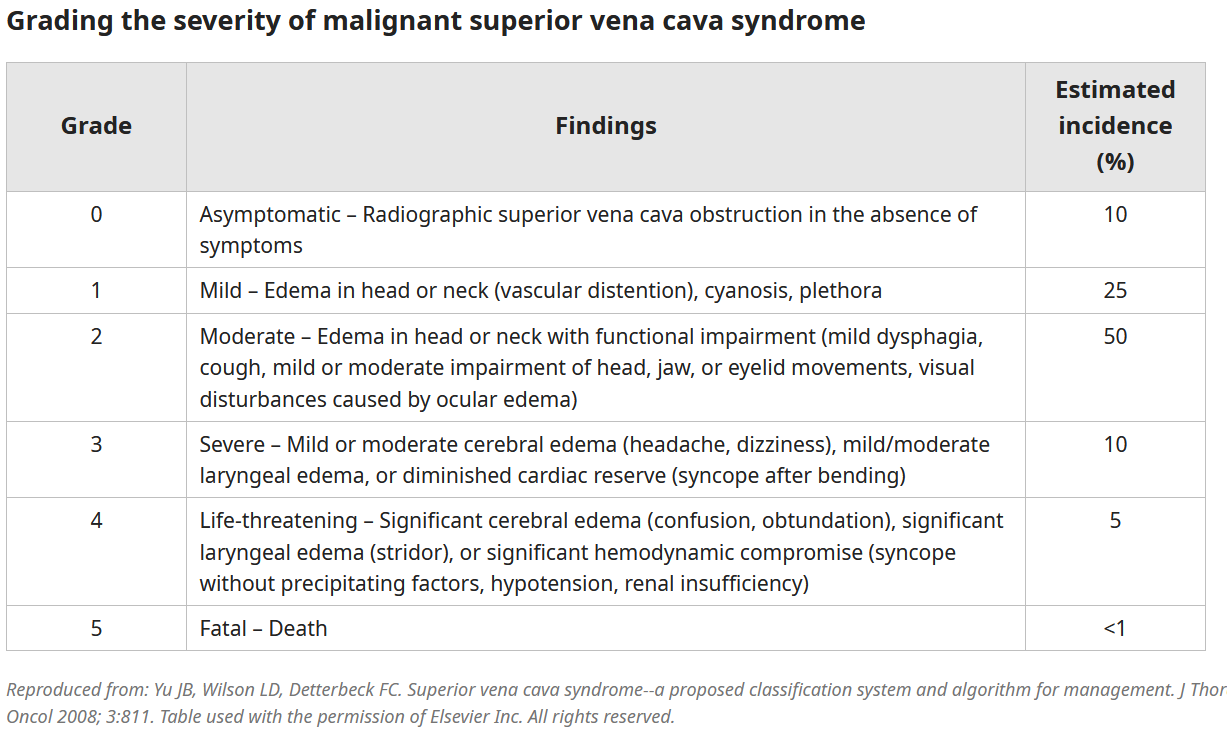
Pathophysiology :
- Obstruction of blood flow back to the heart via the SVC resulting from either compression by tumor collapsing the vessel (60-85% of cases), stenosis of the vessel, and/or intraluminal thrombus.
- Thrombosis may occur from malignant SVC compression (causing stasis and luminal damage); also may occur from indwelling vascular devices (CVCs, pacemaker/ICDs)
- Alternative non-malignant etiologies of obstruction include post-radiation vascular fibrosis/stenosis, Fibrosing Mediastinitis
Diagnostic Testing:
- CT chest w/ contrast is the primary imaging modality to evaluate both vascular compression and thrombus
- MR venogram may also be considered for those with contrast allergy when available
- US can play a lesser role in evaluating for thrombosis of extremity or neck/veins
Treatment :
- Compressive causes:
- Malignancy: chemotherapy and radiotherapy may help shrink tumor
- Endovascular stenting may allow restoration of flow through SVC more
- In cases w/ thrombosis should consider anticoagulation to prevent propagation of thrombosis into other vessels.
- If thrombosis associated with indwelling device, feasibility of removing the indwelling device should be considered
- Elevate head to promote venous drainage and decrease head/neck venous pressures
- Avoid use of vessicant medications through upper extremity IVs which may have extended vascular dwell times given sluggish flow through venous system
- No strong data to support diuresis as elevated venous pressures are localized and not a result of systemic volume overload
Prognosis:
References:
Created on: Tuesday 03-26-2024